
Rodine and Sarah’s story
Hope Makes Everything Possible
“Hope makes everything possible. Hope is essential, the priority.”- Sarah, mother to Rodine
Content Warning: This story includes a mother’s account of losing hope and feeling like she has nothing left to live for. The story ends with recovery and hope.
Sarah recalls, “I gave birth to Rodine, but he took a long time to cry. It took about 30 minutes for him to cry.” Rodine spent two weeks and three days in the Neonatal Intensive Care Unit before they were discharged. “The first time I worried was when he was five months old. His body was very soft, and his neck was still very floppy. I started asking what was wrong, and a lady told me to tie a cloth around his neck to provide support, but his condition continued to get worse.”
The costs of treatment
“That’s when I decided to go back to the hospital. When I arrived, they tested him again and found he had malaria.” By then, Rodine was seven months old. “A doctor there told me that my child had a brain injury due to malaria and that he would not develop like other children and would need more time and attention, and that physiotherapy could help. He referred us to the main government hospital for weekly physiotherapy.”
“I had a disagreement with my husband when the child turned seven months old. The doctor told us that he needed an adaptive chair and physiotherapy. By then, my husband seemed to have understood what was needed, but three days later, he said I should leave his house, saying that the child wasn’t his.” Sarah had lost her own mother just before Rodine was born. She went to stay with her maternal grandparents and looked for small jobs in the village, to help her cover the transport costs for her to take Rodine to his physiotherapy appointments.
Rejection and emotional abuse
When Rodine turned one, he fell ill again and needed a blood transfusion the hospital couldn’t provide. Sarah called his father, after five months of no contact, to tell him. His response was, to reject her and Rodine again. His words caused Sarah hurt and distress. ‘I broke down crying.” She couldn’t grieve openly at home. “I couldn’t cry in front of my grandmother because she was old, and I didn’t want her to see me distressed. I decided to stay silent… I suffered greatly,”
In the following months, Sarah described feeling alone: “With no one by my side, I had to become both mother and father to my child.” This also had a physical impact on her health; “losing weight and becoming pale”. She also felt that that she had nothing left to live for and considered harming herself.
A glimmer of hope
When Rodine was two years old, Sarah took him to the hospital and was advised to purchase a special support chair for Rodine, but this was more than she could afford. As she was leaving the hospital, Sarah met a doctor working there who stopped her and asked about Rodine. Sarah recalls, “She then told me about an organization called Adara and a program that they run called Baby Ubuntu that supports children like him. I explained I didn’t have money… She said, ‘No, it’s not about having money, we will teach you about your child’s condition and how to help him.’ So, I joined them.”
“I left feeling about 10% hopeful, thinking that if I cried, I should cry less.”
At her first sessions, Sarah describes meeting other caregivers caring for a child with disabilities for the first time, and this made her feel shocked but also hopeful. She recalled what people had said, like ‘His father sacrificed him for wealth’ or ‘They are cursed by ancestors.’ Sarah remembers, “I started believing those things might be true. But when I saw those other children, I regained hope. They began teaching us and gave me proper training.”
She met the trainers who would stay with her for years to come: “I thank [the Baby Ubuntu team] because they were the first people I knew in the organization. When I shared my story with them, they counselled me, listened, and treated me like their own child. They told me, ‘From today, you are not alone.’ They explained everything about [Rodine’s] condition and why he was like that. I left the organization feeling about 10% hopeful, thinking that if I cried, I should cry less.”
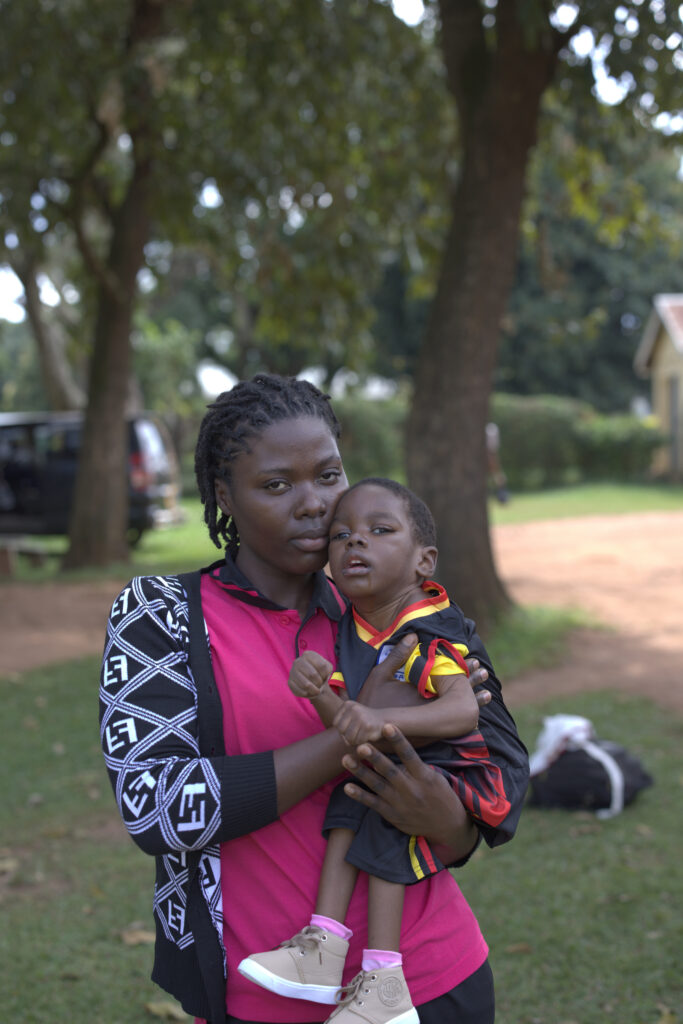
Sarah and Rodine
Hope grows
With time, and consistent medication and physiotherapy, Rodine’s convulsions, which had once lasted 30 minutes at a time, began to ease. Sarah now trains other mothers herself: “I am now able to train other mothers about caring for children with similar conditions, encouraging them not to lose hope. Hope is essential, the first priority… with hope, everything becomes easier. We must also stay strong in caring for these children. But now, I am grateful that I understand and can explain to others. If someone comes to me with a child like mine, I know how to handle and coach them. We need to empathize, as if we are the ones in their shoes, our support system is there to help.”
Sarah’s message to other families is:
“Our journey is unpredictable, with no clear start or end. But if you choose to move forward, focus on where you’re going. We can’t stop such things from happening, but the only way to overcome them is through hope and unity.”
If you are affected by anything you read here, support is available: Uganda Mental Health Uganda toll-free helpline 0800 21 21 21 (Mon–Fri, 8:30am–5:00pm). UK & Ireland Samaritans, free 24/7, call 116 123 or visit samaritans.org.