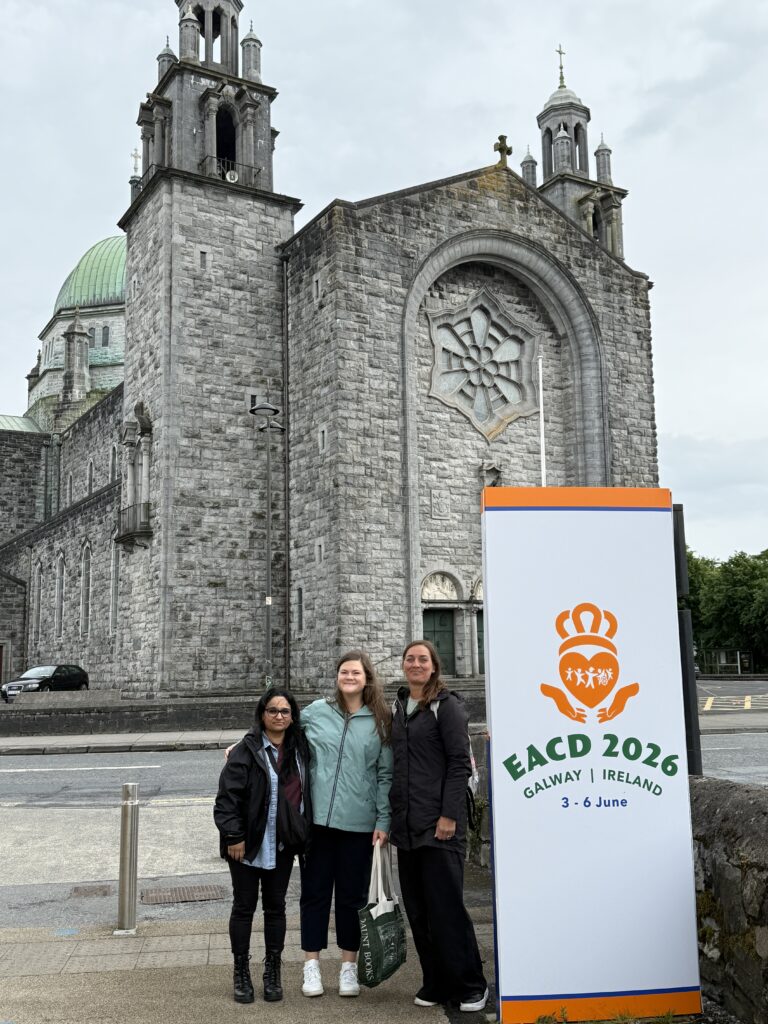
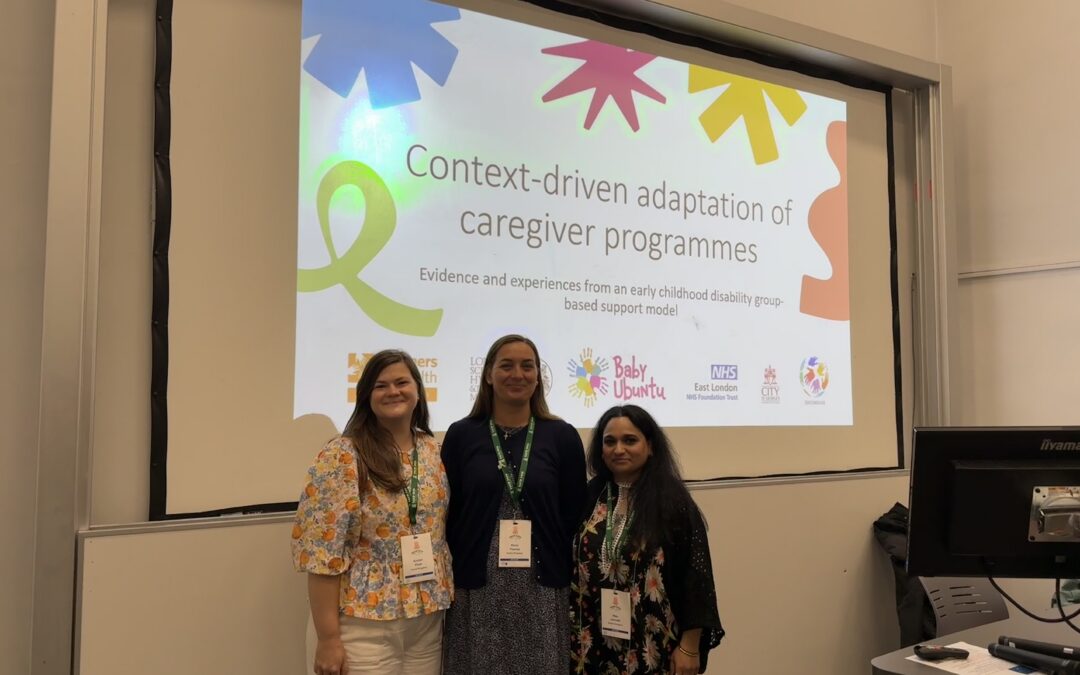
In June 2026, the Baby Ubuntu team was proud to represent our work at the European Academy of Childhood-onset Disability (EACD) annual conference, held in Galway, Ireland. EACD brings together leading voices in childhood-onset disability research and practice from across the world.
Leading an instructional course on programme adaptation
Our core contribution was an instructional course titled Context-driven adaptation of caregiver programmes: Evidence and experiences from an early childhood disability group-based support model. The course was designed for practitioners, researchers, programme implementers, and policymakers who are looking to adapt evidence-based interventions to work effectively in their own settings.
The session was chaired by Kirsten Prest who is part of the Baby Ubuntu core team, and featured contributions from the wider team. Expert parent partners in research Alea Jannath and Keely Thomas attended in person and shared their experiences of co-designing the UK adaptation of Baby Ubuntu, known as Encompass, for the East London NHS setting. Co-founder Cally Tann joined remotely, as did Mathieu Nemerimana from Partners In Health/Inshuti mu Buzima, who spoke about the integration of Baby Ubuntu into Rwanda’s government health systems.
The course drew on established adaptation frameworks to give participants a practical toolkit: the Ecological Validity Model to identify what needs to change across cultural dimensions, the ADAPT guidance to structure the adaptation process systematically, FRAME to document decisions transparently, and TIDieR to clearly describe the original intervention before any changes are made.
Real-world examples brought these frameworks to life. Keely described the step-by-step process of adapting Baby Ubuntu for East London families, including changes to language, imagery, activities, and delivery structure. Alea spoke about why lived experience must be at the heart of adaptation work, and why involving parents makes programmes not only more culturally appropriate but more genuinely useful.
We were also fortunate to hear from Nahdiah Purnamasari, who has been leading the adaptation of Baby Ubuntu for Indonesia. Her work is directly informing the adaptation guidelines we are currently developing.
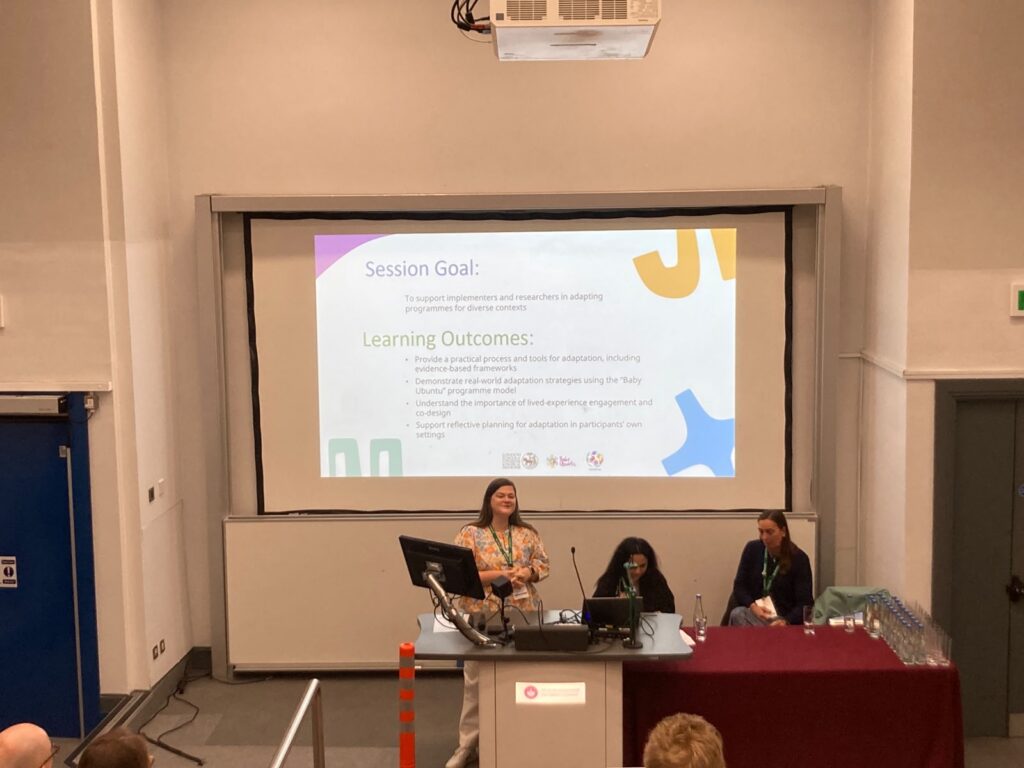
Session goals and learning outcomes for our instructional course
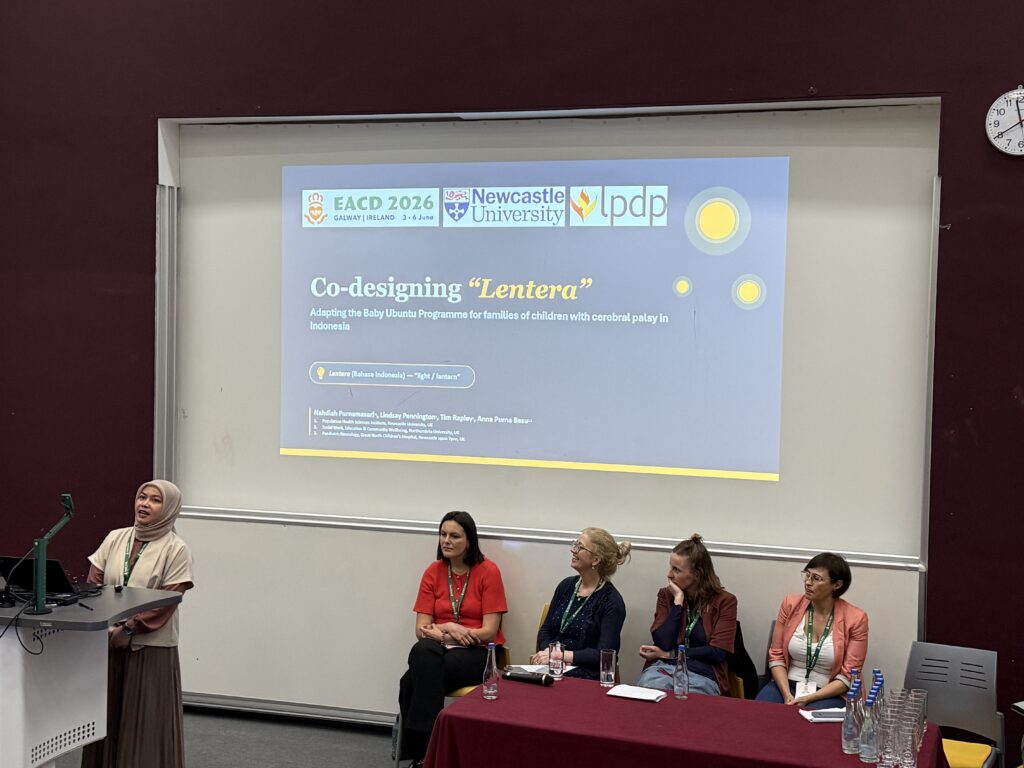
Nahdiah presenting her PhD work on adapting Baby Ubuntu for Indonesia
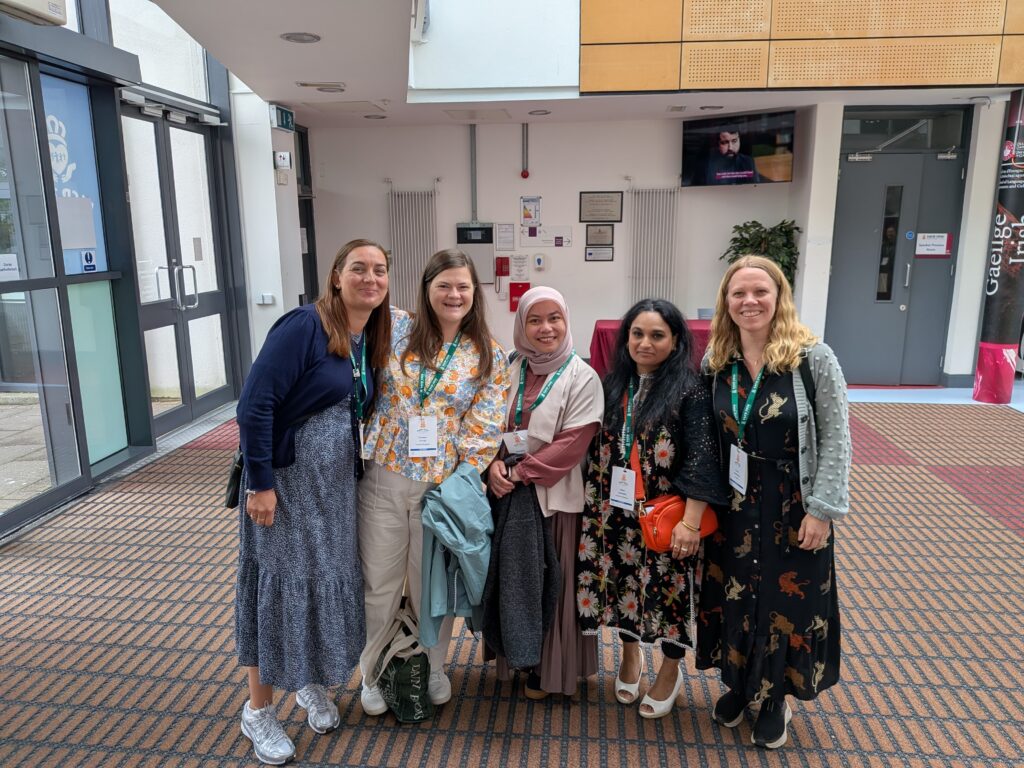
The Baby Ubuntu team were able to connect with others conducting similar work globally. From left to right: Keely Thomas, Kirsten Prest, Nahdiah Purnamasari, Alea Jannath and Carin Andrews
Co-design on the main stage
The team also co-presented a mini symposium titled Illustrating the use of co-design to advance equity in children’s rehabilitation services and research, alongside colleagues from CanChild McMaster University and the University of Sydney. Alea and Keely described what being involved in co-design has meant for their own lives and for their communities, a reminder that doing this work well has an impact that extends far beyond the research itself.
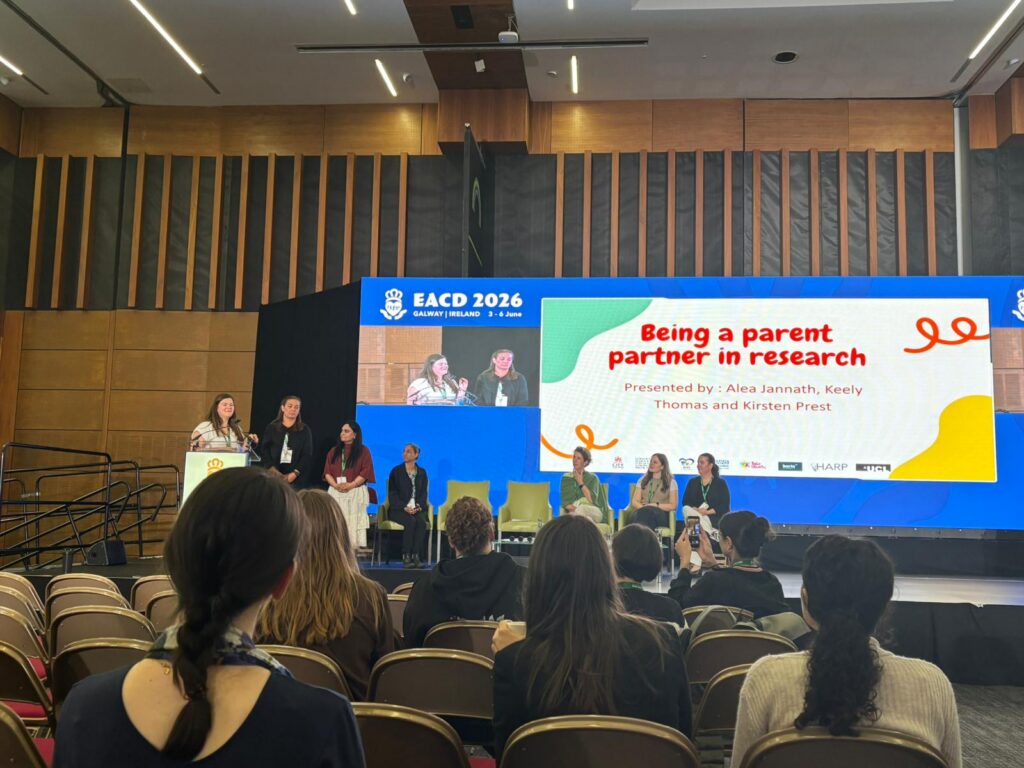
Kirsten, Alea and Keely presenting on the use of co-design in adapting Baby Ubuntu for the UK as part of a wider symposium
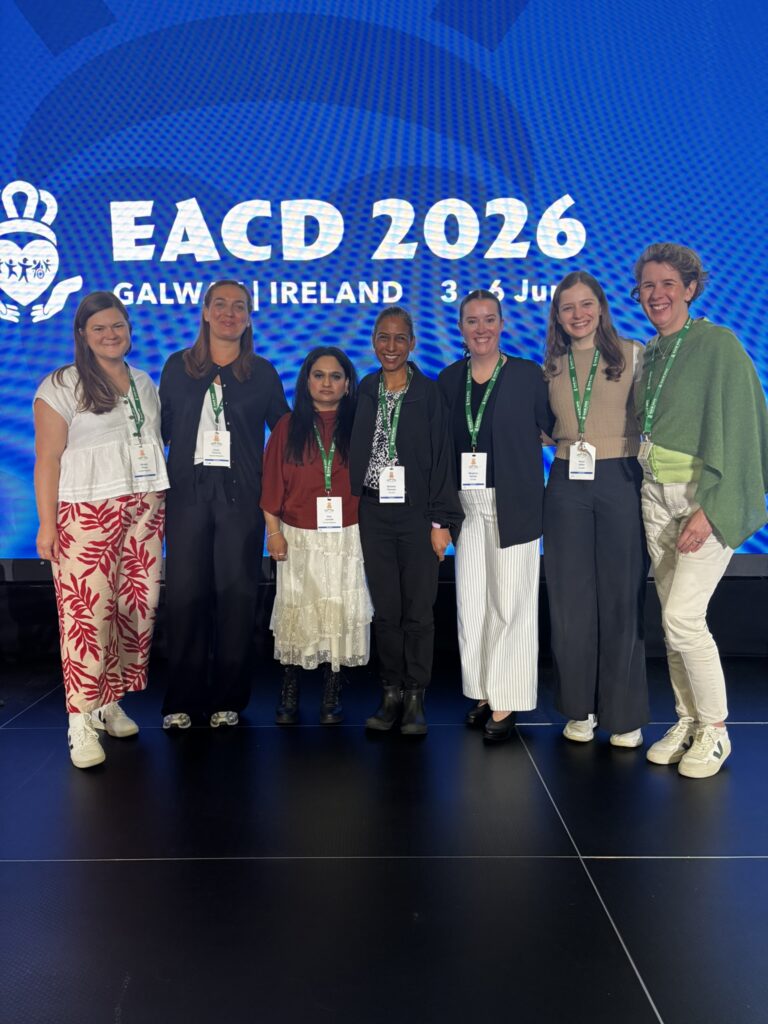
Kirsten, Keely and Alea with co-presenters Michelle Phoenix, Meaghan Reitzel and Maya Albin from CanChild McMaster University, and Sue Woolfenden from University of Sydney
Connecting with a global community
Beyond our own sessions, the conference offered rich opportunities for connection. EACD 2026 placed a strong emphasis on the F-words for Child Development, a framework that resonates with the Baby Ubuntu mission. We exist to support caregivers as the most immediate environment in a child’s life, and to promote conditions where children with disabilities can experience fun, participation, and genuine inclusion. Hearing this reflected throughout the conference affirmed our work and core values.
We are grateful to everyone who attended our sessions, engaged with our work, and shared their own.